

January 14, 2026
Wondering About Webs
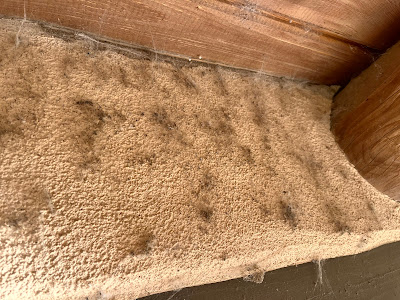
Photo credit: M. Jackovich.
Question:
Every summer I get spider webs on the underside of my porch roofs. I do not see any spiders when I inspect them close-up. I use a leaf blower to get rid of them, but they reappear within a few weeks. I have a yellow porch light that remains on all night. The first freeze usually puts an end to the infestation. What are these insects and how do I prevent them from building these webs?
- M. Jackovich
Answer:
While it is hard to identify the culprit without a good picture of the spider making these webs, we can make some educated guesses! Cobweb spiders in the family Theridiidae make somewhat messy webs like this, so they could be the culprit. When webs get covered in dust, this is a sign that the spider is no longer maintaining them, which may be why you haven’t seen any spiders on them. This family of spiders includes spiders which are harmless to humans, as well as black widows. However, black widows are rather large spiders and usually very conspicuous given their glossy black bodies, so in this situation you would probably see them up there on the webs themselves. More on black widows in a moment.
After further investigation, some small, camouflaged spiders were found.
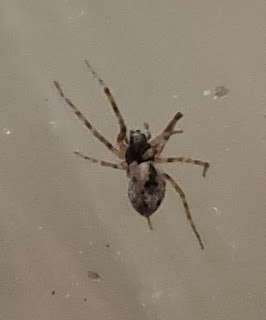
Photo credit: Bethany Abrahamson.
I am not a spider expert, and the picture quality is low for identification purposes, but I think this could be a member of the Dictynidae family. This family includes some social spiders, which might explain the concordance of webs.
Spiders may look scary, but they are wonderful garden helpers when it comes to pest control. Some of the pests that spiders help control include mosquitoes, flies, termites, aphids, and white flies, which can help keep the landscape healthy and reduce the spread of disease.
If you need to keep spiders from a specific area, check hidden areas of outdoor structures frequented by humans and pets. Wear gloves to provide extra protection when doing outdoor cleaning to protect your hands from bites and other unexpected surprises, and be aware of your surroundings as you work. Areas with constant disturbance are less attractive to spiders, and so brushing the old dusty cobwebs away is one tactic to discourage populations in specific areas. Check your home for entry points such as broken window screens or gaps in door frames to keep them out.
Leaving lights on at night attracts nighttime bugs that spiders and other nocturnal predators may like to eat. If you have an outdoor spot that you want to keep spider-free, try reducing lights at night, or changing to a motion detection light so it’s on less often (learn more about the benefits of reducing light pollution from the DarkSky NM Chapter).
If you have to relocate a spider, UC IPM provides the following method: “If you are concerned about wildlife and feel comfortable doing so, you can remove individual spiders from indoor areas by placing a jar over them and slipping a piece of paper underneath to seal off the opening when you lift the jar. Release the spider about 100 feet from your home into a natural area.” You can use a stiffer piece of paper to capture the spider more effectively without the paper giving out on you. In my experience black widows don’t typically skitter away like other spiders, so once you find a spider you usually have time to gather the supplies you need for a relocation, and the spider will still be there when you get back.
Remember: spiders are our allies, so we encourage you to share your outdoor habitat with these valuable invertebrates, and let them help you keep your yards and porches pest-free.
While it is difficult to identify spiders based just on their webs, here are some identification tips as you observe your garden or landscape:
Non-spider webs
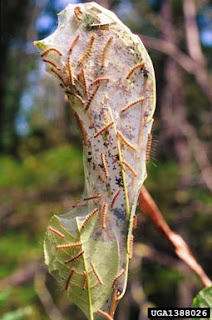
Fall webworm. Photo credit: Insect Images.org, Steven Katovich, Bugwood.org, CC BY-NC 3.0 US.
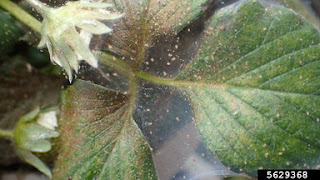
Two-spotted spider mite. Photo credit: Insect Images.org, Whitney Cranshaw, Colorado State University, Bugwood.org, CC BY-NC 3.0 US.
Other arthropods besides spiders make webs, including webworms, spider mites, among others. These webs are typically found on plants. While spiders can also form their webs on vegetation, webs formed by plant-eating insects will be accompanied by signs of plant damage such as chewing or 'stippling'. The webs may also include other debris such as frass (poop) or bits of leaf material. Take a close look and you will often find the culprit hidden among the webbing. Damage from webworms is generally aesthetic, while spider mites can be more harmful to plant health. You can send photos or samples to your local extension agent if you are unsure.
Black widow (Family Theridiidae)
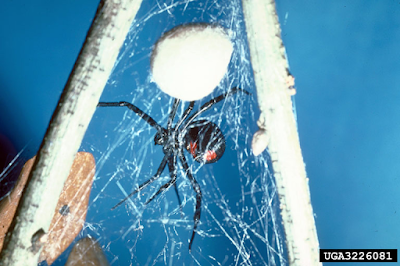
Photo credit: Insect Images.org, Ronald F. Billings, Texas A&M Forest Service, Bugwood.org, CC BY-NC 3.0 US.
Black widow webs are often diffuse and irregular. Typically you’re going to find black widow webs in unused corners of the yard, woodpiles, etc. Black widows aren’t aggressive, and while their bite can be dangerous their coloration and size make them easy to watch out for. You can learn more about them Black Widows.
Jumping spider (Family Salticidae)
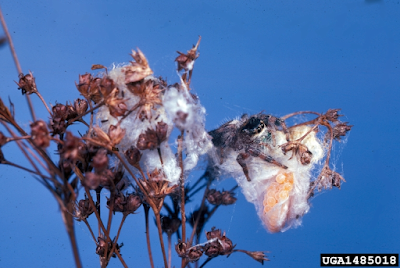
Jumping spider with egg sac hidden in a web. Photo credit: Insect Images.org, Sturgis McKeever, Georgia State University, Bugwood.org, CC BY-NC 3.0 US.
Jumping spiders don't rely on webs to catch prey; instead, they leap to catch their food. In my experience, I often find jumping spider webs in hidden spots and crevices where they form a webbed nest to guard their eggs, so you're not likely to see their webs without actively hunting for them. Jumping spiders are easy to identify by their fuzzy, stout bodies (sometimes with intricate patterns like owl feathers), and large eyes. Jumping spiders are both adorable and fascinating! Learn more Jumping Spiders!
Orb weaver spider (Family Araneidae)
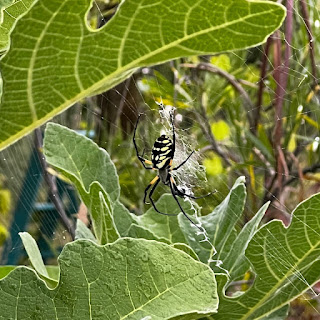
Photo credit: Marisa Thompson.
These are the most photogenic of spiderwebs, you can often find them in gardens weaving their spectacular traps. When you think of classic spider web, you are probably thinking of orb weaver webs!
Funnel spider (Family Agelenidae)
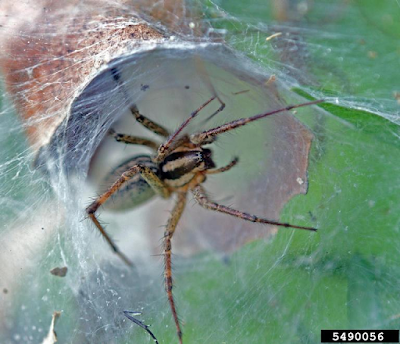
Photo credit: Insect Images.org, David Cappaert, Bugwood.org, CC BY-NC 3.0 US.
You may see these recognizable webs in the shrubs, where they target bugs that think a shrub is a safe place to hide.
For more information on spiders, check out these resources:
- Spiders of the Arid Southwest - New Mexico State University. Richman, D.B. (2024).
- Guide H-172: Backyard Beneficial Insects of NM - New Mexico State University. Bennett, A.B., Kersten, M.L. (May 2019).
- Spiders: Evolution of Group Living and Social Behavior - Science Direct. Grinsted, L., Lubin, Y.
- Black Widows In Montana - Montana State University Extension. Kerzicnik, L. (2022).
- Jumping Spiders - Colorado State University Extension. Colorado Arachnids of Interest.
- Spiders and Why You Want Them Around - University of Delaware Cooperative Extension. Ferry, G., Kunkel, B. (2025).
- Spiders in the Home - Colorado State University Extension. Peairs, F.B., Cranshaw, W.S., Cushing, P.E. (2013, reviewed, 2025).
- What Are all These Webs That Are Showing Up Inside My House? - Oregon State University Cooperative Extension. Wiman, N. (2025).
Bethany Abrahamson is the Cooperative Extension Agriculture Agent for Sandoval County.
Marisa Y. Thompson, PhD, is the Extension Horticulture Specialist, in the Department of Extension Plant Sciences at the New Mexico State University Los Lunas Agricultural Science Center, email: desertblooms@nmsu.edu, office: 505-865-7340, ext. 113.
Links:
For more gardening information, visit the NMSU Extension Horticulture page at Desert Blooms and the NMSU Horticulture Publications page.
Send gardening questions to Southwest Yard and Garden - Attn: Dr. Marisa Thompson at desertblooms@nmsu.edu, or at the Desert Blooms Facebook page.
Please copy your County Extension Agent and indicate your county of residence when you submit your question!