

May 5, 2025
Winter Aphids
"Different insects vary as to the manner of passing winter," begins noted Agricultural Hall of Famer and original green chile advocate Fabián García, in a bulletin for the New Mexico College of Agriculture and Mechanic Arts back in 1908 (p. 7). One pest García mentioned that can survive the winter both in egg and adult life stages is the cabbage aphid (Brevicoryne brassicae), which García referred to as “one of our cabbage enemies”. Cabbage aphids appear gray, about 2mm long, with short horns on their backs.
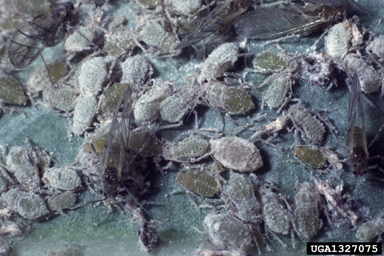
The cabbage enemy.
Photo credit: Alton N. Sparks, Jr., University of Georgia,
Bugwood.org. CC BY 3.0 US
Aphids are one of my favorite insects because of their cute pear-shaped bodies and, in the case of the cabbage aphid, the way they look like fluffy little sheep due to their waxy coating. Unfortunately what they do to gardens is less cute. Aphids can vector diseases, and the honeydew they leave behind can attract other pests such as ants. Cabbage aphids in particular will feed deep inside cruciferous vegetables, leading to quality reduction.
Remember to keep an eye out for aphids during the winter months. Even though Sandoval County (and other parts of New Mexico) can get very cold, they might be hiding in your greenhouse or other protected areas, and eggs do survive winter temperatures. I’ve found early spring aphids hiding out in sedum and on trees.
In García’s 1908 bulletin, he suggests many of the same integrated pest management techniques for controlling aphid populations that can be used today. Aphids can be sent flying using a strong jet of water directed into crevices and under leaves; if containerized, do so in a different vicinity than the pot’s final resting place so surviving aphids can’t come crawling back. García also suggested cleaning up debris to reduce overwintering shelters for the aphids. In the case of a chemical treatment, García suggested “whale-oil soap solution” as a treatment method (pg. 9). While we wouldn’t recommend this today, it might have acted in a similar way to modern horticultural oils and soaps, which are considered acceptable treatment options for the modern garden. Remember that pesticides may be effective, but be sure to protect yourself and others: always follow the label, and consider other IPM strategies first.
Here's a historical picture from the bulletin showing treatment of a cabbage field with kerosene emulsion (no longer considered an acceptable form of treatment, and not just because García notes that “the taste of the kerosene would be noticed on the cabbage” (p. 9)).
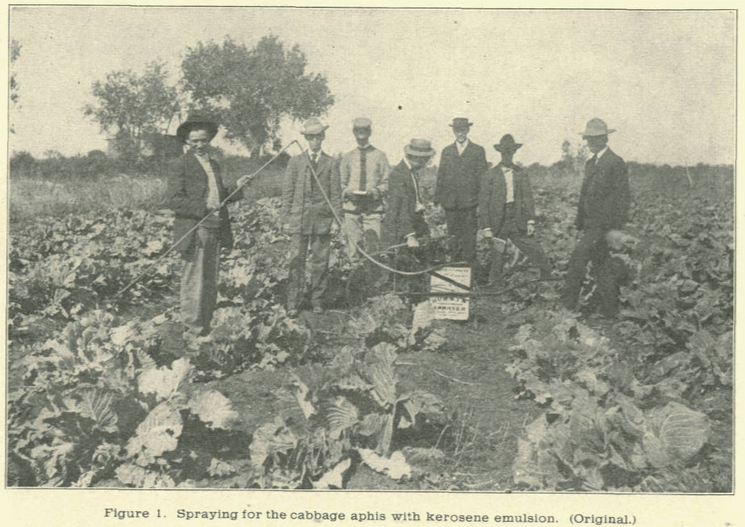
Photo credit: García, Fabián. (1908). Injurious Insects.
Beneficial insects can also help keep aphid populations low, so avoid pesticides that could harm them (even organic or home remedies may not be safe for pollinators). Look for the dry, swelled-up bodies of aphid mummies: these are the work of beneficial parasitic wasps. Ladybugs and lacewings prey on aphids, too. In general, monitor for large populations and keep plants healthy, and you too can enjoy (or at least tolerate) the sight of a few little aphids in winter.
For more information on Fabián García:
- Injurious Insects. Garcia, F. (1908). New Mexico College of Agriculture and Mechanic Arts, Agricultural Experiment Station, Agricultural College, NM. Bulletin 68, page 8.
- ACES Heroes - Fabián García
For more information on aphids and aphid management:
- Guide H-176: Integrated Pest Management (IPM) Strategies for Common Garden Insect Pests of New Mexico. Freeman, A.J., M.L. Kersten, A. Skidmore, M.Y. Thompson, (2021).
- Aphids & Their Relatives (PDF). Sutherland, C. (2006).
- Pest Notes: Aphids. UC ANR Publication 7404. University of California Statewide IP Program Flint, M.L. (revised 2013).
- Cabbage Aphid Brevicoryne brassicae Linnaeus (Insecta: Hemiptera: Aphididae). Gill, H. K., H. Garg and J. L. Gillet-Kaufman (2013, revised 2023). Entomology and Nematology Department, UF/IFAS Extension #EENY577.
Bethany Abrahamson is the Cooperative Extension Agriculture Agent for Sandoval County.
Marisa Y. Thompson, PhD, is the Extension Horticulture Specialist, in the Department of Extension Plant Sciences at the New Mexico State University Los Lunas Agricultural Science Center, email: desertblooms@nmsu.edu, office: 505-865-7340, ext. 113.
Links:
For more gardening information, visit the NMSU Extension Horticulture page at Desert Blooms and the NMSU Horticulture Publications page.
Send gardening questions to Southwest Yard and Garden - Attn: Dr. Marisa Thompson at desertblooms@nmsu.edu, or at the Desert Blooms Facebook page.
Please copy your County Extension Agent and indicate your county of residence when you submit your question!